The right takeaway payment solution can transform your checkout speed dramatically. Just Eat Takeaway.com’s checkout is now four times faster, their approval rate has increased by 8%, and payment fraud has dropped by 50% compared to manual card entry. These improvements aren’t just impressive numbers; they directly impact customer satisfaction and revenue.
Given that COVID-19 has made takeaway, click and collect, and delivery services more critical than ever for food businesses, optimizing your payment technology is no longer optional. In this guide, we’ll explore common payment bottlenecks slowing down your transactions, essential features that accelerate checkouts, top innovations transforming takeaway speed, and practical steps for implementing faster takeaway payment solutions in your operations.
Common payment bottlenecks in takeaway operations
Manual card entry delays
Manual keying presents serious operational challenges for takeaway operations. When staff manually enter card information at checkout, you’re exposing your business to significantly higher chargeback liability and processing fees. In fact, with advancements in chip technology, there’s no legitimate reason for manually keyed transactions when the cardholder is present.
Outdated credit card readers that can’t process Apple Pay or Google Pay from mobile devices create unnecessary slowdowns. Staff training becomes critical here. Monitoring key-entry rates helps identify problem areas, whether it’s specific stores, terminals, or individual employees processing too many manual transactions. Key-entered transactions carry different rules than chip fallback and shouldn’t be confused with magnetic stripe fallback.
Payment gateway connection issues
Network connectivity problems disrupt the communication flow between customers, merchants, and financial institutions, causing transactions to timeout or drop entirely. Up to 30% of customers abandon checkout due to payment gateway issues, including wrong payment methods, declined cards, or security concerns.
Gateway failures trace to four specific areas: expired or misconfigured API credentials, network timeouts, webhook delivery failures, and environment mismatches between sandbox and production. Most gateways timeout at 30 to 60 seconds, so firewall rules blocking gateway endpoints can create immediate problems.
Card declines happen at three distinct points: the issuing bank rejects the card (9% of abandonments), fraud tools flag the transaction, or the gateway encounters a technical error. False declines from overly aggressive fraud filters reject legitimate buyers, costing you revenue.
Multiple system disconnects
Operating with disconnected platforms creates what industry experts call a “Frankenstein stack”. When restaurants bolt together online ordering tools, delivery tablets, loyalty apps, and scheduling software without proper integration, staff waste time re-entering orders from one system into another.
Nearly half (48%) of restaurant leaders surveyed believe their operating systems aren’t fully integrated. General managers end up re-entering information into multiple systems, leading to errors and service delays. At checkout specifically, long lines caused by chip reader lag or limited payment options damage the customer experience.
Checkout friction points
Checkout abandonment stems from specific friction sources. Lengthy forms with too many required fields slow the process, with every additional keystroke creating an opportunity for customer doubt or distraction. Technical failures like page timeouts, broken discount codes, and payment processor outages cause customers to abandon permanently. Limited payment options matter too. If customers can’t use their preferred method, whether digital wallets, buy now pay later, or bank transfers, you lose the sale.

Essential features of fast payment technology
Speed-optimized takeaway payment solutions share four critical capabilities that separate them from outdated systems.
Single-tap payment capability
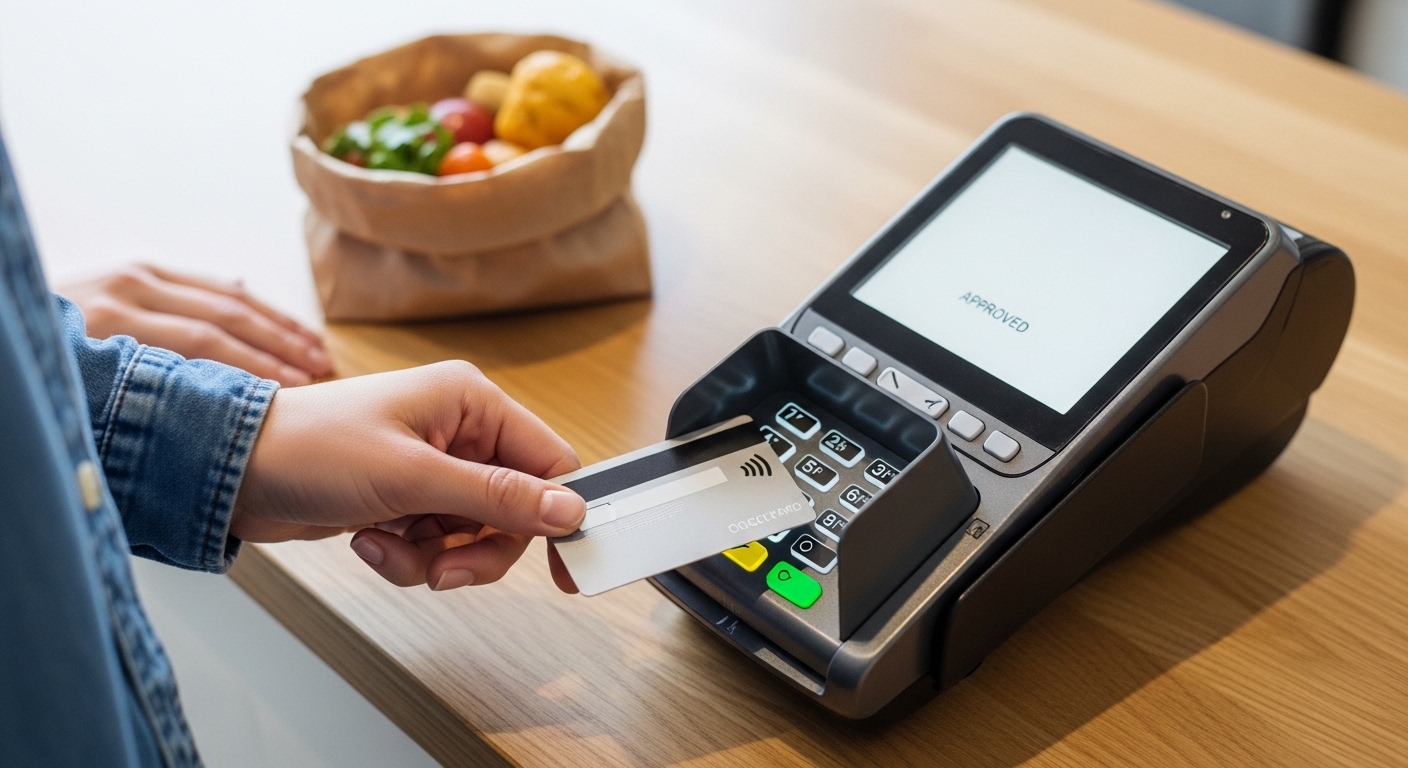
Contactless payments process transactions about 10 times faster than traditional methods. When customers tap their payment device against the terminal, radio-frequency identification initiates approval within seconds. Currently, 79% of customers choose mobile or contactless payments, with 73% specifically using digital wallets. Globally, over 66% of in-person transactions on Mastercard’s network now use contactless technology.
Offline transaction processing
Your takeaway payment solution needs to function when internet connectivity drops. Offline mode stores transaction data locally on the device, allowing staff to continue adding products, applying discounts, and accepting payments. Once connectivity returns, the system automatically syncs all stored data with your central server, updating inventory levels and sales reports. You have up to 24 hours after accepting your first offline payment to reconnect and process transactions.
Multi-payment method support
Limited payment options negatively impact customer satisfaction and sales. Your system should accept NFC, swipe, and digital payments including Apple Pay, Google Pay, and Amazon Pay. Correspondingly, terminals must support chip, tap, and digital wallets to meet diverse customer preferences. This flexibility proves essential during peak hours when customers expect their preferred payment method to work instantly.
Automatic order confirmation
Manual order confirmation handling consumes time and introduces errors. Automated systems read, import, and verify confirmations regardless of format. The technology automatically captures delivery times, quantities, and prices while eliminating entry errors that occur during manual processing. Automated reconciliation spots discrepancies immediately, allowing you to launch corrective workflows without production delays.
Top payment innovations transforming takeaway speed
Several breakthrough technologies are reshaping how quickly we process takeaway transactions.
Integrated POS payment systems
Cloud-based POS platforms accept payments through swipe, dip, or tap even when offline. Oracle Payments integrates debit cards, credit cards, Apple Pay, Samsung Pay, and Google Pay into a single dashboard, eliminating the need for multiple payment processors. This consolidation puts all transaction data, payment information, and associated costs in one reporting system.
Pre-authorized payment holds
Pre-authorization temporarily reserves funds for transactions where the final amount remains undetermined. Restaurants and delivery apps like Uber Eats and DoorDash use holds to ensure customers can cover charges even if bill amounts change. This eliminates multiple payment requests and guarantees payment for agreed services without asking for card details repeatedly.
Biometric payment authentication
Facial recognition technology decreases ordering and checkout times by up to 90 seconds per transaction while increasing ticket size by 4 percent. During the 2024 Formula 1 Miami Grand Prix, 100 percent of biometric transactions authenticated and processed successfully in under a second. Customers enroll by taking a photo that converts into an encrypted template stored securely in the cloud.
Voice-activated payment processing
Voice payment adoption grew from 8% of U.S. adults in 2017 and projects to reach 31% by 2022. Globally, 2.5 billion people use voice assistants weekly. Customers complete transactions by speaking commands to digital assistants, with authentication through voice recognition, PINs, or multi-factor verification.
Instant payment settlement
Same-day settlement gives you access to funds within hours instead of days. Real-time payment rails settle transactions in seconds rather than the typical three-day wait, directly improving cash flow management.
Split payment and group ordering
Split payment charges each participant only for items they ordered, including delivery fees, taxes, and tip. The system auto-adjusts tips based on individual meal costs rather than the entire order.
Implementing speed-focused payment solutions
Assessing your current payment workflow
Start by evaluating transaction fees, system integration capabilities, and customer experience touchpoints. Your terminal should process payments in no more than a couple of seconds. Run transaction time reports weekly and look for patterns. Data transforms vague concerns about long lines into specific, actionable fixes.
Integration with delivery platforms
Third-party ordering platforms integrate directly through your POS dashboard. Chowly transmits delivery orders straight to your system and prints them like in-house orders, with setup completed in five to seven business days. Square for Restaurants consolidates all third-party delivery apps, menus, and payment processing into one tablet. SpotOn partnered with ItsaCheckmate automatically routes platform orders to your POS, printing kitchen tickets with delivery service names and order details.
Staff training requirements
Train employees on speed as a separate skill. Even the fastest systems slow down when run by untrained personnel. Human factors like manual workarounds and interface unfamiliarity add extra seconds to each transaction.
Measuring transaction speed improvements
Track transaction completion time from first item scanned to receipt printed. Benchmark against industry standards: cash register completions should take under ten seconds, while modern systems complete payments in under three. Monitor payment authorization times, particularly for digital wallets and mobile systems.
Conclusion
Fast payment technology isn’t just about saving seconds; in fact, it directly impacts your revenue, customer satisfaction, and operational efficiency. Start by identifying your specific bottlenecks, then choose solutions that support contactless payments, offline functionality, and multiple payment methods. Train your staff thoroughly on the new systems, as shown above, because even the best technology fails without proper implementation. Monitor your transaction times weekly, and you’ll see measurable improvements within days of deployment.