Waiting in long lines at coffee shops local to your area can quickly turn that perfect coffee experience into a frustrating ordeal. We’ve all been there anxiously checking our watches while the queue barely moves, despite the enticing aroma of 100% Organic, Rain Forest Alliance certified beans brewing nearby.
However, as coffee enthusiasts ourselves, we understand that the local coffee shop experience should be enjoyable from start to finish. Certainly, Knoxville and other cities offer “a multitude of choices when it comes to finding a delicious cup of piping hot (or iced) coffee”, but what truly differentiates the best establishments isn’t just their exceptional brews. Furthermore, it’s their ability to serve customers efficiently, especially during those chaotic morning rushes.
In this article, we’ll explore how implementing a reliable payment system can dramatically reduce queues during peak hours, transforming both customer satisfaction and your bottom line. From addressing the challenges of outdated payment methods to showcasing real-world implementation success stories, we’ll provide a comprehensive guide to streamlining your coffee shop operations.
The Peak Hour Challenge: What Happens Without a Reliable System
Peak hours at coffee shops local to any area can quickly turn into operational nightmares without a reliable payment system. The morning rush or lunch hour crowd creates a cascade of problems that affect everyone involved from customers to staff to the bottom line.
Long wait times and frustrated customers
Studies show that shoppers are typically willing to queue for only six to nine minutes before abandoning their purchase entirely. Even more concerning, 73% of customers will abandon a purchase if they have to wait more than five minutes to check out.
For local coffee shop owners, these statistics translate into real-world customer dissatisfaction. Once customers experience long wait times, 70% are less likely to return to that establishment, even after just one negative experience, which is why integrating a swift and reliable payment machine for café service is a critical operational upgrade. Moreover, an overwhelming 86% of customers will avoid a store altogether if they perceive the queue time there to be too long.
The psychological impact is significant as well. Customers waiting longer than expected become increasingly frustrated, though interestingly, waiting shorter than expected substantially increases satisfaction. First impressions matter 32% of customers would stop doing business with a brand they loved after just one bad experience like an excessively long wait.
Increased pressure on staff
When payment systems fail during busy periods, staff bear the brunt of customer frustration. Without proper queue management systems, employees become overwhelmed trying to handle surges in demand, leading to significant stress and eventual burnout.
The operational chaos often creates staffing challenges too. Businesses struggle to allocate the right number of employees during peak times resulting in either understaffing (causing delays) or overstaffing (wasting resources). Both scenarios decrease employee satisfaction and contribute to operational inefficiencies.
Lost revenue opportunities
The financial impact of poor queue management is substantial:
- Increasing queue length from 10 to 15 people can reduce sales by up to 10%
- Long queues generate sales reductions equivalent to a 5% price increase
- 77% of consumers are less likely to return to a store after experiencing long checkout lines
Additionally, slow payment processing creates a bottleneck effect. What seems like just a few extra seconds at the till multiplies across hundreds of transactions daily, creating significant delays and frustrated customers who may abandon their purchase altogether.
In fact, over 80% of businesses report cash flow disruptions due to payment inefficiencies. For some companies, the impact is severe nearly 10% lose more than 5% of their annual revenue, with 5% losing over 10%. These aren’t minor setbacks but rather significant profit and growth inhibitors.

Designing a Payment System That Works
Creating an effective payment system for coffee shops local to any area requires thoughtful planning around three core elements. Unlike traditional cash registers that become bottlenecks, modern payment systems act as revenue accelerators, particularly during those crucial morning rushes.
Speed and reliability as core features
The foundation of any effective payment system is its speed and reliability. With contactless payments now making up more than two out of three transactions globally, systems must be designed to process these interactions instantly. Real-time transaction processing significantly enhances cash flow management by eliminating settlement delays.
For a local coffee shop, this translates to:
- Immediate fund availability after transactions are approved
- 24/7 processing capability, including weekends and holidays
- Transparent status tracking with real-time notifications
Reliability means maintaining high approval rates ideally above 96% with minimal downtime. Given that over 80% of businesses report cash flow disruptions due to payment inefficiencies, investing in a robust system quickly pays for itself.
User-friendly interface for both staff and customers
A user-friendly checkout process is essential since complicated payment procedures deter customers and potentially lead to lost sales. The interface should minimize friction throughout the transaction journey while enhancing usability for both parties involved.
For staff, the system should allow for quick training and intuitive operation under pressure. Meanwhile, customers benefit from straightforward navigation and clearly labeled calls to action that guide them seamlessly from selection to confirmation. This dual focus on usability significantly reduces transaction times a critical factor during peak hours.
Compatibility with mobile and contactless payments
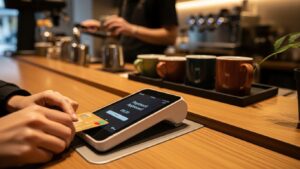
Today’s payment landscape demands flexibility. Contactless options like tap-to-pay provide a quick, touch-free experience that’s become increasingly popular since the pandemic. These technologies use Near Field Communication (NFC), allowing secure data transfer over short distances.
Notably, mobile payments extend beyond just accepting credit cards. A comprehensive system should support:
- Digital wallets (Apple Pay, Google Pay)
- Tap-to-pay cards
- Mobile payment apps
This compatibility is particularly valuable given that most cards issued today by major banks are contactless by default. Ultimately, implementing these modern payment methods helps local coffee shop owners stay relevant in an increasingly digital marketplace while simultaneously addressing their queue challenges.
Implementation in a Local Coffee Shop Setting
Seeing a new payment system in action reveals its true value for coffee shops local to any area. Let’s explore how these systems perform in real-world environments.
Before and after comparison
Many coffee shops struggle with slow transactions until they implement modern payment solutions. At Smith’s Corner Café, outdated payment processing led to long lines and frustrated customers. After implementing a new system, they experienced 30% faster checkout times, generating higher daily sales. Similarly, a regional café chain with 15 locations saw a 40% reduction in order processing time after deploying contactless ordering.
The financial impact is equally impressive. Compass Coffee reported a 26% revenue increase per wallet user after implementing a stored value wallet in their mobile app. They also saved over 28% on payment costs an immediate boost to their bottom line. Another local coffee shop completely eliminated nearly $9,600 annually in credit card processing fees through a cash discount program.
Staff training and onboarding
Successful implementation begins with proper staff training. Initially, creating a conducive learning environment where employees feel comfortable asking questions proves essential. Rather than overwhelming staff with every feature at once, effective training introduces the system gradually, focusing only on relevant areas for each role.
Hands-on experience emerges as the most effective approach. Setting up test accounts allows employees to practice processing sales and splitting bills without consequences. Furthermore, designating “POS superstars” to serve as on-site champions helps create excitement around the new system and provides immediate support for other staff members.
Customer feedback and response
Customer reactions to new payment systems have been overwhelmingly positive. At one café implementing contactless ordering, 90% of customers preferred the contactless option, whereas another reported an 85% satisfaction rate with their new system.
Consequently, adoption rates tell the success story. Compass Coffee saw wallet adoption grow 113% month over month as customers embraced the convenience. Additionally, frequency of visits increased by 30% among customers who adopted the wallet compared to loyal regulars who did not. The data clearly demonstrates that customers value speed and convenience above all else exactly what reliable payment systems deliver.
Beyond the Queue: Long-Term Business Advantages
The benefits of a reliable payment system for coffee shops local to your area extend far beyond just reducing lines. Essentially, these systems become strategic assets that continue delivering value long after implementation.
Better data tracking and analytics
Modern payment systems act as powerful data tools, capturing valuable, non-sensitive information about purchasing habits, preferred payment methods, and transaction frequency. This data provides deep insights into customer behavior when analyzed properly. For instance, your local coffee shop might discover evening customers prefer using specific payment methods, allowing for targeted promotions during those hours.
Payment analytics enable businesses to monitor transaction volumes, identify operational bottlenecks, and optimize revenue opportunities. Ultimately, 90% of a bank’s useful customer data comes from payment transactions, making this information invaluable for future growth.
Improved brand perception
A smooth, secure payment experience leaves customers feeling positive about their decision to visit your local coffee shop. First impressions matter customers will share their positive experiences with friends and online communities, creating organic word-of-mouth marketing that builds your reputation as professional and customer-centric.
Furthermore, businesses known for minimal wait times can command 5-12% price premiums compared to competitors with average wait times, demonstrating how operational efficiency directly translates to brand value.
Conclusion
In essence, the journey from frustrating queues to seamless service underscores a fundamental shift in how a modern café operates. Implementing a robust and efficient payment system transcends the immediate goal of speeding up transactions; it represents a strategic investment in the very heart of the business. This transformation directly addresses the core challenges of peak hours, turning potential customer dissatisfaction into loyalty and converting operational pressure into staff confidence. The resulting benefits enhanced customer satisfaction, reliable revenue capture, and invaluable business insights solidify a foundation for sustainable growth. Ultimately, moving beyond the bottleneck of an outdated process unlocks a more resilient and profitable operation, ensuring that the focus remains where it should be: on crafting exceptional coffee and cultivating a welcoming community space, one swift and satisfying transaction at a time.