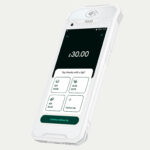
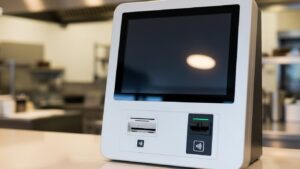
Selecting the right payment machine for takeaway businesses can make or break your customer experience and sales efficiency. As someone who’s evaluated numerous card readers specifically for small businesses, I’ve found that the best options combine advanced capabilities with portability while supporting various payment methods.
When running a takeaway, your payment machine needs to do more than just process transactions. It must efficiently handle your daily operations while providing a seamless experience for both you and your customers. However, many owners make critical mistakes during the selection process, leading to unnecessary costs and operational headaches.
In this guide, I’ll walk you through how to avoid these common pitfalls when choosing a payment machine for takeaway businesses. We’ll examine how your daily operations should influence your choice, which features actually matter for your business model, and the four mistakes you absolutely need to avoid. Furthermore, I’ll show you practical ways to test payment solutions before committing, because finding the right match is essential for scaling your business efficiently.
Start with your takeaway’s daily operations
Before diving into specific payment machine models, take a moment to assess your daily business rhythm. Your operational patterns directly affect which payment solution will serve you best.
How many transactions do you process?
Transaction volume matters significantly when selecting a payment machine for your takeaway. If you’re handling hundreds of orders daily, especially during rush hours, you’ll need a device with faster processing speeds and robust battery life. Alternatively, if your business processes fewer transactions but at higher average values, reliability becomes more important than raw speed.
The busier your establishment, the more critical it becomes to have backup options. Consider having a secondary payment method ready in case your primary system encounters issues. This preparation prevents losing sales when faced with technical difficulties.
Do you need mobility or a fixed counter setup?
Your physical setup plays a crucial role in choosing the right payment machine. For takeaways with limited counter space or those offering table service alongside takeout options, portable card readers provide flexibility. These compact devices allow staff to bring payment directly to customers waiting in line or seated at tables.
Conversely, if all your transactions happen at a single checkout point, a fixed terminal might offer better stability and connection reliability. Fixed terminals typically connect via ethernet rather than Wi-Fi, reducing connectivity interruptions that can frustrate customers.
Do you serve in-store, online, or both?
Modern takeaways often operate across multiple channels. If you offer both in-store and online ordering, your payment system needs to accommodate this hybrid approach. Look for solutions that can:
- Process payments from your website or app
- Connect with food delivery platforms
- Reconcile online and in-person transactions in a single dashboard
Many takeaways now serve customers through multiple avenues simultaneously. Your payment system should be versatile enough to handle orders coming in from your counter, website, and third-party delivery apps without creating accounting headaches at the end of the day.
Match features to your business model
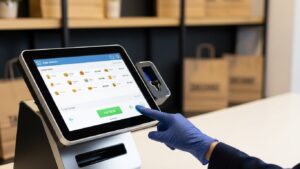
Now that you understand your operational needs, let’s match payment machine features to your specific business model. The right combination of features can streamline your takeaway operations and enhance the customer experience.
Standalone vs mobile-connected readers
Choosing between standalone terminals and mobile card readers depends on your specific business setup. Standalone credit card machines process payments directly without requiring additional devices, making them ideal for fixed locations with dedicated checkout areas. They typically include built-in receipt printing and multiple connectivity options.
Mobile credit card readers, meanwhile, connect to smartphones or tablets to process payments through dedicated apps. These compact, portable devices excel for businesses needing mobility, such as food trucks or pop-up shops. They’re particularly valuable for takeaways offering table service alongside counter orders, enabling staff to bring payment capabilities directly to customers.
Importance of receipt printers and barcode scanners
Receipt printers remain essential for takeaway businesses, generating physical proof of purchase for both you and your customers. They enhance transaction accuracy and provide clear documentation for financial records. Moreover, thermal receipt printers support integration with various digital payment methods, ensuring you can offer modern payment options while still providing traditional receipts.
Barcode scanners additionally boost operational efficiency by streamlining inventory management and checkout processes. They enable swift ordering and payment processing, reducing customer wait times. For takeaways managing extensive product inventories, barcode scanners provide accurate, real-time tracking that minimizes errors and improves stock control.
Support for Apple Pay, Google Pay, and QR codes
Contactless payment options have become increasingly important for takeaway businesses. Supporting Apple Pay and Google Pay offers customers quick, secure payment methods using their smartphones or smartwatches without manually entering card information. These methods use tokenization and biometric authentication, enhancing transaction security while reducing checkout time.
QR code payments represent another valuable option, allowing customers to scan and pay directly from their phones without dedicated hardware. This approach works excellently for takeaways seeking to minimize equipment costs while still offering modern payment capabilities.
Avoid these 4 common mistakes when choosing a payment machine
Hunting for the perfect payment machine involves avoiding several critical pitfalls that can impact your takeaway business. After assessing numerous options, I’ve identified four common mistakes that often lead to unnecessary headaches for small business owners.
Mistake 1: Choosing based on price only
Despite the temptation of advertised “lowest rates,” focusing solely on price often leads to higher overall costs. Many payment processors charge different rates depending on factors like card type and transaction method. What appears as an attractive qualified rate might apply only to specific cards physically swiped through a terminal, with substantially higher rates for rewards cards or online transactions.
Additionally, watch for hidden fees that can significantly erode profits, including cancelation fees, withdrawal fees, batch-processing fees, and PCI compliance fees. Instead of fixating on advertised rates, calculate your effective processing rate based on your typical transaction mix.
Mistake 2: Ignoring connectivity and offline mode
Connectivity issues can halt your entire operation. Unfortunately, many takeaway owners overlook offline capabilities until their internet fails during a busy shift. Quality payment machines should offer offline mode, allowing you to continue accepting card payments during network outages.
Remember that offline payments typically need to be uploaded within 24-72 hours. Without this feature, you risk losing sales or frustrating customers during connectivity problems. Consider devices with multiple connection options—Wi-Fi, ethernet, and cellular backup—to maintain business continuity regardless of technical difficulties.
Mistake 3: Not checking integration with your POS
Integration problems between your payment processor and point-of-sale system create operational bottlenecks. Before committing to any payment machine, verify it works seamlessly with your existing POS system to avoid clunky workarounds that slow down checkout.
Ensure the integration capabilities support your specific business needs, including inventory tracking, reporting, and customer management features. Poor integration ultimately means double work, reconciliation headaches, and potential accounting errors.
Mistake 4: Overlooking customer support and updates
Reliable customer support proves crucial when payment issues arise. Many businesses discover too late that their provider offers limited assistance for setup difficulties or technical problems. Look for payment processors with 24/7 support across multiple channels (phone, email, chat) and evaluate their reputation for responsive service.
Regular software updates also play a vital role in maintaining security and adding new features. Updates improve performance and user experience while protecting against emerging threats. Without regular updates, your payment system may become vulnerable to security risks or miss out on innovative features that could streamline your operations.
Test before you commit
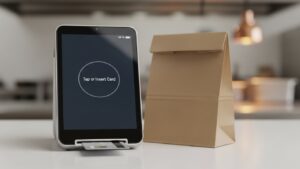
Even with thorough research, nothing beats hands-on experience with a payment machine for takeaway businesses. Fortunately, many providers offer opportunities to test their solutions before making a long-term commitment.
Use free trials or demo units
Many payment processors offer free trial periods ranging from 14 to 30 days with no credit card required. These trial periods allow you to fully experience the system’s capabilities in your actual business environment. Alternatively, some companies provide demo units or scheduled demonstrations where their representatives can walk you through the features relevant to your takeaway operations.
Compare user interfaces and ease of use
During your trial period, pay close attention to the user interface. According to research, even advanced systems can remain intuitive if they make good use of color and have a drag-and-drop design. Evaluate how quickly your staff can complete common tasks like processing orders, applying discounts, or handling refunds. Some interfaces might require extra clicks for basic functions, which can significantly slow down service during rush periods.
Check for hidden fees or contract lock-ins
Alarmingly, 42% of merchants have been affected by hidden fees in payment processing. Prior to signing any agreement, thoroughly examine contracts for early termination fees, which can range from hundreds to thousands of dollars. Look for flexible termination clauses without excess fees and ensure data portability protections. Additionally, request a complete breakdown of all potential charges, as monthly minimums, batch fees, and PCI compliance fees can substantially increase your effective processing rate.
Conclusion
Selecting the right payment machine for your takeaway business ultimately comes down to understanding your specific operational needs rather than following generic recommendations. After analyzing your daily transaction volume, mobility requirements, and service channels, you can make an informed decision that aligns with your business model.
Consequently, prioritizing essential features like connectivity options, integration capabilities, and support for modern payment methods will serve your business better than chasing the lowest advertised rates. Though price matters, hidden fees and contract lock-ins can quickly negate any apparent savings.
Remember those four critical mistakes we discussed? Each one represents a potential pitfall that could disrupt your daily operations and frustrate customers. Therefore, take time to evaluate offline capabilities, POS integration, customer support quality, and the true cost of any payment solution before signing any agreements.
Additionally, never underestimate the value of hands-on testing. Free trials and demo units provide real-world insights that brochures and sales pitches simply cannot. During these trial periods, pay close attention to both staff adoption and customer reception—factors that significantly impact your operational efficiency.
Finding the perfect payment solution might seem overwhelming at first, but this methodical approach will help you avoid costly mistakes while positioning your takeaway business for growth. Once you’ve implemented the right payment system, you’ll likely notice improved efficiency, happier customers, and ultimately, a healthier bottom line for your small takeaway business.