Cash transactions in the UK have fallen below 15% of total retail payments. That means over 85% of your customer interactions now depend entirely on your payment infrastructure performing without interruption at peak hours, during broadband outages, and through every silent firmware update your terminal receives overnight. Most small business owners invest serious thought into their product offering, their branding, and their digital presence. Card payment hardware, however, tends to get selected quickly based on an upfront price comparison and then forgotten. That approach is costing businesses far more than they realise not just in monthly terminal fees, but in abandoned checkouts, slow queues, and staff time lost to end-of-day reconciliation errors that should have been automated from the start.
The Real Impact of Checkout Friction on Customer Retention
The true problem with an underperforming card payment machine is not the device itself it is the cascading effect that a single failed or slow transaction creates. A contactless payment that hangs for six seconds during a Friday evening rush creates a visible queue. That queue creates visible frustration. Frustrated customers don’t simply leave annoyed; they leave with a formed opinion about the reliability of your business. Research from the British Retail Consortium identified checkout friction including sluggish or unreliable payment terminals as a measurable contributor to reduced repeat customer rates among independent UK retailers. Beyond the customer experience angle, there is the issue of settlement lag. Many merchant services providers still operate on T+2 or T+3 settlement cycles, meaning today’s takings do not land in your business account for two to three working days. For a café operator managing supplier payments, or a mobile trader covering daily stock costs, that gap is not an inconvenience it is an active constraint on working capital.
How the Right Terminal Eliminates Both Problems at Once
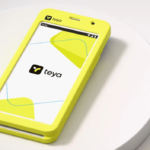
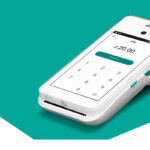
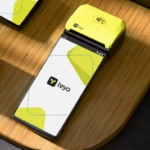
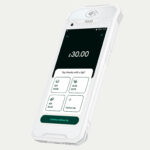
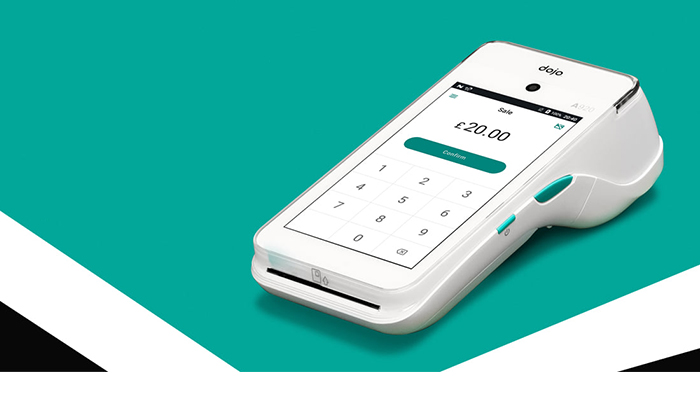
This is precisely where terminal selection becomes a strategic business decision rather than a procurement tick-box. The dojo card machine has gained significant traction among UK hospitality and retail operators because it directly addresses the two core failure points described above checkout speed and settlement timing rather than treating them as separate concerns. Built on a dual 4G and Wi-Fi architecture, the dojo card machine maintains full transaction capability even when your fixed broadband connection drops, a scenario that causes complete payment paralysis for businesses running single-connection terminals. Its average contactless processing time of under two seconds is not a marginal gain across a hundred transactions per day, the cumulative time saved is felt viscerally by both staff and customers.
On the settlement side, next-working-day fund transfer means the revenue you generate today is accessible tomorrow, replacing the cash flow uncertainty that T+2 providers build into your operation by default. The device is also PCI-DSS Level 1 compliant, meeting the highest tier of payment card industry security standards and meaningfully reducing your liability exposure in the event of a data security incident.
What Genuine Payment Security Actually Requires at the Hardware Level
Many business owners assume that any card terminal sold by a licensed UK provider is automatically secure. The reality is more nuanced. End-to-end encryption at the device level where cardholder data is encrypted at the exact moment of capture, before it ever touches your local network is meaningfully different from encryption that occurs only during gateway transmission. The former limits your data exposure window almost entirely. The latter leaves a gap. PCI-DSS compliance specifies 12 core requirements across network security, access control, and monitoring, and achieving Level 1 status requires a Qualified Security Assessor to independently validate those controls.
For businesses processing fewer than one million transactions annually, a Self-Assessment Questionnaire is typically sufficient but the underlying controls still apply. NFC-enabled contactless acceptance must extend beyond Visa and Mastercard to include Apple Pay, Google Pay, and Samsung Pay; digital wallet usage among UK consumers under 45 exceeded 62% in early 2026, and a terminal that cannot accept these methods is already behind the expectations of a significant portion of your customer base.
Connecting Your Payment Terminal to Your Wider Business Systems
A card machine that operates in isolation from the rest of your business infrastructure is solving only half the problem. The genuinely transformative gain comes when your payment terminal feeds directly into your inventory management, sales reporting, and end-of-day accounting and that connection is precisely what a well-configured EPOS system enables. When every card transaction simultaneously updates your stock count, logs against your VAT record, and populates your live sales dashboard, you eliminate the manual reconciliation step that costs the average small retail business owner approximately 45 minutes per working day.
Over a full trading year, that is roughly 190 hours nearly five full working weeks spent on data entry that a connected payment management system handles automatically and accurately. For restaurant and hospitality operators specifically, EPOS-integrated payment processing enables table-side settlement, split billing, and cover-level reporting, all of which reduce service time and measurably improve table turnover rates. The link between your card machine and your business intelligence layer is not a technology upgrade for its own sake it is the operational architecture that allows you to scale without proportionally increasing back-office headcount.
Choosing the Right Terminal Type for Your Specific Business Model
Not every card machine suits every business environment, and selecting incorrectly means either overpaying for features your operation will never use or under-specifying for the transaction volume you actually process. Countertop terminals are the correct choice for fixed-location businesses retail stores, salons, barbershops where the payment point does not move and a stable wired broadband connection is available. Portable wireless terminals serve restaurants and hospitality environments far better, because staff carry the device to the table rather than directing customers to a fixed counter.
Compact mobile card readers Bluetooth-paired devices that work with a smartphone merchant app suit market traders, mobile beauty professionals, and pop-up retailers, where the priority is low monthly overhead and location independence rather than advanced reporting capability. Understanding your average transaction value, your peak hourly transaction volume, and whether your customer base predominantly uses contactless, chip-and-PIN, or digital wallets will determine which terminal specification genuinely serves your business rather than simply appearing on a provider’s approved product list.
Reading Your Merchant Services Agreement Before It Reads Your Margins
One of the most consistent mistakes small business owners make when selecting a card payment provider is focusing exclusively on the headline transaction rate and missing the fee architecture underneath it. A provider advertising 1.25% per transaction may appear substantially cheaper than a competitor at 1.6% until you factor in the authorisation fee charged per transaction attempt regardless of outcome, the monthly terminal rental, the PCI compliance administration charge, the premium applied to American Express and international card processing, and the minimum monthly service fee that applies when your transaction volume falls below a specified threshold.
The total cost of ownership for a merchant services contract includes all of these components, and only by adding them together against your actual monthly transaction volume can you calculate your true effective rate. Any provider that requires a 24 to 36-month commitment without contractual service-level guarantees around uptime, settlement speed, and dispute resolution should be approached with particular scrutiny. The UK market now offers competitive no-lock-in monthly rolling contracts, and a willingness to sign long-term should never be treated as a substitute for reading what you are signing.
How Black Silk Studio Takes the Guesswork Out of Payment Setup
At Black Silk Studio, we work with UK small and medium-sized businesses across retail, hospitality, and mobile trades to identify, configure, and deploy card payment solutions that are genuinely matched to their operational requirements not simply the most convenient option for a reseller’s margin. Our payment solutions process begins with a detailed needs analysis: we look at your average transaction volume, your settlement timing requirements, your existing EPOS setup, and the environments in which your terminals need to perform. From there, we recommend from a curated range of PCI-compliant, FCA-registered payment hardware and merchant services partnerships all offering flexible, no-long-term-lock-in contracts and next-working-day fund settlement as standard.
We also handle the full setup, integration, and staff orientation process, so you are not left with a device in a box and a PDF manual. Terminals arrive pre-configured to your merchant account. EPOS connectivity is established before go-live. And because our team remains available for ongoing support, the relationship doesn’t end at the point of installation. Whether you are a café owner replacing an underperforming terminal, a salon expanding to a second location, or a market trader looking for a reliable mobile payment solution, Black Silk Studio provides the expertise to get your payment infrastructure right the first time and the support to keep it running without disruption.
Final Thoughts
Your card machine is not a peripheral device it is part of the revenue infrastructure your business depends on every single trading day. A terminal chosen on price alone, without consideration for transaction speed, connectivity resilience, settlement timing, and integration with your wider business systems, will cost you more over twelve months than any upfront saving justifies. The businesses that approach payment hardware as a strategic decision selecting terminals with PCI-DSS compliance, dual connectivity, next-day settlement, and EPOS integration are the ones that serve customers faster, access their funds sooner, and spend significantly less time on administrative tasks that technology should handle automatically. Getting this right is not complicated. But it does require asking the right questions before signing anything, and understanding that the cheapest card machine at the point of purchase is rarely the cheapest solution across the lifetime of your contract.